“My husband kicked me out of the new car he had just bought, mocking me as dirty and uncouth — but the next day, he regretted it.”/th
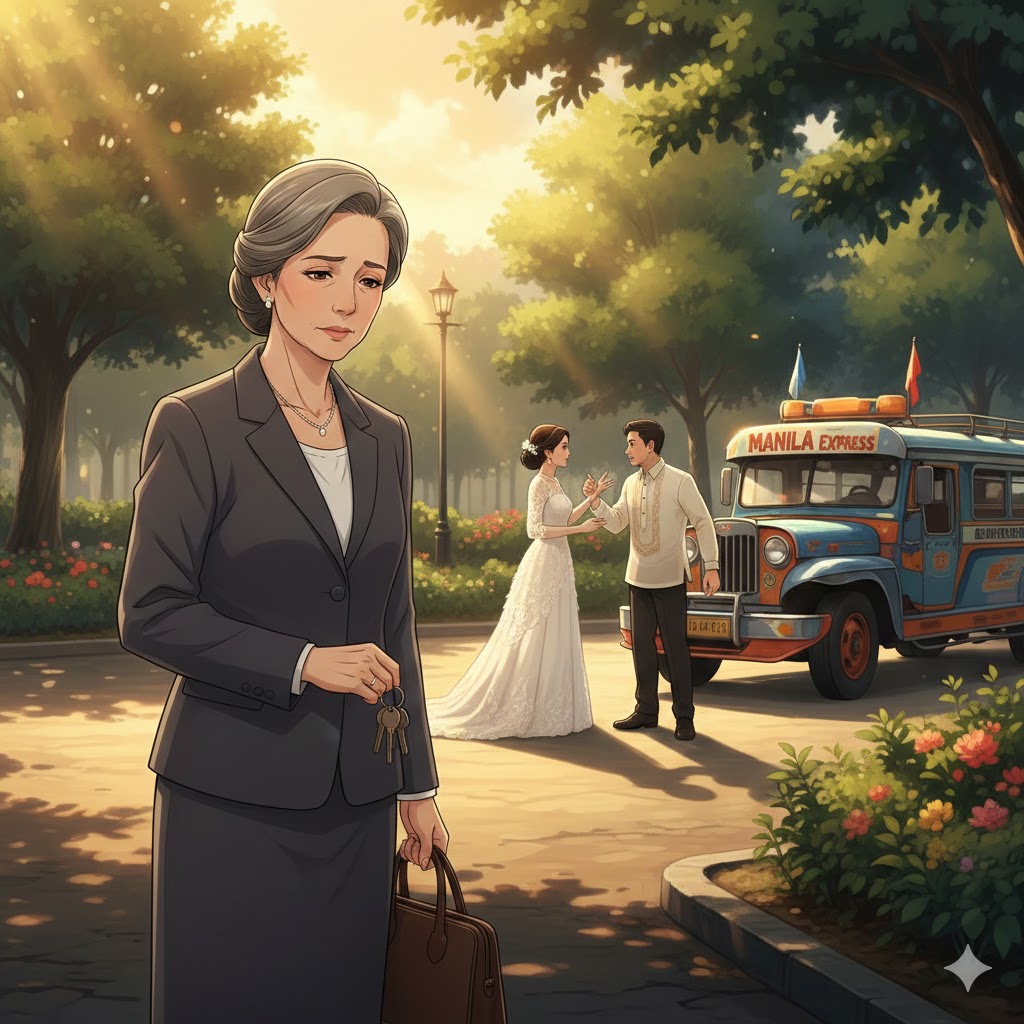
The day he brought home the new car, the rain had just stopped. The road in front of the apartment still gleamed with water, traced with thin threads of mud. I had just come back from the market, arms full of wet greens, the heels of my plastic slippers caked with dirt. He texted: “Come down, I’ll take you for a spin.” I wiped my hands on the hem of my shirt, my heart fluttering like it was our very first date.
The car was gleaming, the smell of new leather filling my nose. I sat on the passenger seat, careful and small. Before I could fasten my belt, he bent down to inspect the floor. Two faint footprints had appeared on the felt mat. His face darkened.
— “My God, don’t you know how to keep things nice? It’s a new car!”
— “I’m sorry… let me get a tissue to wipe it…”
— “Wipe what! You’re always filthy, provincial, reeking of the market. I’ve told you a hundred times—don’t bring that shrimp-paste smell into my car!”
“Filthy, provincial”—the words fell like a stone. I clenched the vegetable bag till it crumpled. He pulled over close to the curb, unlocked the door, jerked his chin.
— “Get out. This car doesn’t suit you.”
I set the bag at my feet, unclicked the belt, and stepped down. The drizzle returned. Before I closed the door, I looked at him once and said, calm as a mirror:
— “You’re not afraid of dirtying the car. You’re afraid of dirtying your heart.”
The door clicked shut—small, but sharp as a knife.
That night I went to my mother’s. The street smelled of wet plastic and earth after rain, and from some kitchens, ginger and lemongrass. I sat on the porch, listening to the rain drum the tin roof. My phone buzzed: he had posted a photo, leaning against the hood, with a caption: “Trying not to let myself down.” The comments lined up—“Congrats, big shot.” I told myself not to cry. The tears warmed my cheeks anyway.
Mother set a hand on my shoulder.
— “Daughter, if a man loves the shell, let him live with the shell. You have a heart—don’t mistake yourself for a felt mat.”
I smiled crookedly. She said she had a checkup at the district hospital in the morning. I reminded her to bring the insurance card and papers. I dozed near dawn.
By morning the clouds sat heavy. The city warned of heavy rain. I took her to the hospital, registered, got a number. She was fine, just a bit tired. I made soy milk, split a baguette. Near noon the rain turned white. A text from him popped up: “Where are you? My car died in the middle of the road. I’ve called roadside assistance forever, no one’s picking up.” Before I could reply, he called. Rain pounded his windshield through the speaker.
— “Can you hear me? I’m stuck in the Nguyen Huu Canh underpass, the water’s rising… phone’s about to die… Did my mom call you?”
— “No. I’m at the hospital with my mother.”
— “With… your mother?”
— “She called last night, short of breath. I brought her in at six a.m. We’re waiting for an endoscopy.”
Silence for a beat. Then he stammered:
— “Can… can you call someone for a tow? I… I don’t know what to do.”
I looked at the downpour outside the hospital eaves as a siren wailed somewhere. I had no reason to help someone who had just called me “filthy” and “provincial.” But my mother sat beside me, hands trembling around her chart. She nodded: “Help him, child.” I dialed Uncle Tư Lợi—the mechanic by the market who had unjammed more than a few stuck gears in my life.
He picked up at once.
— “Duyên?”
— “Yes, Uncle. Someone’s stalled in the underpass, water’s rising. Can you tow him out?”
— “Send me the plate and location. I’m on my way.”
I texted my husband: “Stay put. Don’t try to start it. Pop the hood for ventilation. My uncle is coming.” Then I put my phone away and turned back to my mother. She smiled.
— “See? We ‘provincial’ folks aren’t small. The countryside has neighbors to call.”
I nodded. In my mind, he bobbed in the flood, overlapped with yesterday’s frown at two pale shoeprints.
After more than an hour, the doctor called my mother’s name. Before I pushed open the exam room door, something softened in me—he was still my husband. I shot off one more text: “Feet off the mat. Sit on a chair. Don’t touch anything else.” Then I took my mother’s hand.
When she finished, we headed to ultrasound. He called—his voice hoarse, wind howling through it.
— “Your uncle came. Pulled me out. Thank you. I’m at the hospital now. Where’s Mom?”
— “Gastroenterology. Third floor.”
— “I’m coming up.”
Fifteen minutes later he appeared in the hall, shirt soaked, hair a tangle, leather shoes wrinkled with water. He froze when he saw me helping my mother sip warm tea. The man who had thrown me out of his car the day before now looked at me like a life buoy in a flood.
— “Duyên… I’m… sorry.”
I set the cup down, even-voiced:
— “Sorry for the car or for what you said?”
— “For… everything.”
— “‘Everything’ is too broad. Do you remember your words yesterday? ‘Filthy. Provincial.’”
He lowered his head. My mother coughed gently and waved him over.
— “Sit, son. Terrible rain, isn’t it?”
— “Yes… I’m sorry, Mom. I…”
— “Apologize to the car mat. I’m not angry. I only want the two of you to speak kindly to each other.”
The doctor called my mother again. When I came back out, he was still standing there, a lost child. I went to fetch the file; he awkwardly held out a plastic bag.
— “Here… bread and chicken congee. I bought it downstairs. Eat some.”
I looked at the steam curling from the porridge. Raindrops still fell from his hair to the floor, spreading into little trails, fading like those two prints on yesterday’s mat.
The results weren’t serious. Vitamins and some diet notes. I exhaled. At the cashier, we were short because of extra tests. He fumbled for his wallet.
— “I’ll transfer—”
— “It’s okay. I’ve covered it.”
I had paid that morning with the money I’d been saving to help my aunt and uncle fix their roof back home. He heard, and his eyes reddened.
We took my mother home. The sky was clearing. Puddles along the alley glittered like scattered salt. At the gate he stopped and picked up a rag. Not to wipe the car—but my plastic slippers. I flinched; he said quietly:
— “Let me. Yesterday I cleaned the mat without knowing how to clean myself.”
The words passed through my chest, leaving a sudden warmth. But warmth wasn’t enough to erase last night’s sting. I told him to carry my mother’s bag while I gathered the odds and ends. Once she was inside, he turned to me, hesitant:
— “Will you come home with me?”
I looked at the car parked at the mouth of the lane. Still shiny, still beautiful, but to me it was only a hulking shell.
— “You can drive the car home. I’ll go home with my self-respect.”
He fell silent. I went on, reading it off like a list:
— “I don’t despise your car. I won’t accept a man who values a floor mat over his partner. Yesterday you kicked me out for two muddy prints. Today, if not for those ‘country folk’ and the ‘market network’ you sneered at, your car might still be stuck under that underpass. And your mother—if she hadn’t reached me—might still be gasping at the bedside. So you see: my ‘provincial’ ways kept your loved ones safe, and my supposed ‘dirt’ knows how to clean messes your shiny car can’t.”
He lifted his eyes, wet.
— “I know. I was wrong. Give me a chance? I’ll learn to love a pair of mud-streaked plastic slippers, because they lead me through rainy days.”
I smiled—for the first time in two days, the smile wasn’t crooked.
— “A chance isn’t a promise. It’s small acts, repeated, until they become habit. Start by apologizing to Mom, call Uncle Tư to thank him, and… apologize to the ‘provincial’ you mocked.”
— “I will.”
— “And one more thing—tonight, if I come home, can your felt mat handle the shrimp-paste smell?”
He laughed through tears.
— “Not just handle it—need it. So I never forget today.”
Evening lowered, the clouds thinning into sheets. I settled my mother in and made a simple dinner: gourd soup, braised mackerel, boiled greens with shrimp paste. He took the car to be washed—not to show off, but to rinse away the day. Before turning out of the lane, he rolled down the window and called:
— “I’m going to learn to keep my heart before I keep a car mat.”
I waved. No promises, no hasty reunion. Only the warm, savory scent drifting across the yard, and the rain gone, leaving pale streaks of water on the road—like yesterday’s mud, easy enough to wash away—and something else, harder to scrub, which he was learning to clean from the inside. Yesterday, he drove me off his new car. Today, he had to learn to ask for a ride on mine—the one without wheels, powered by respect.